
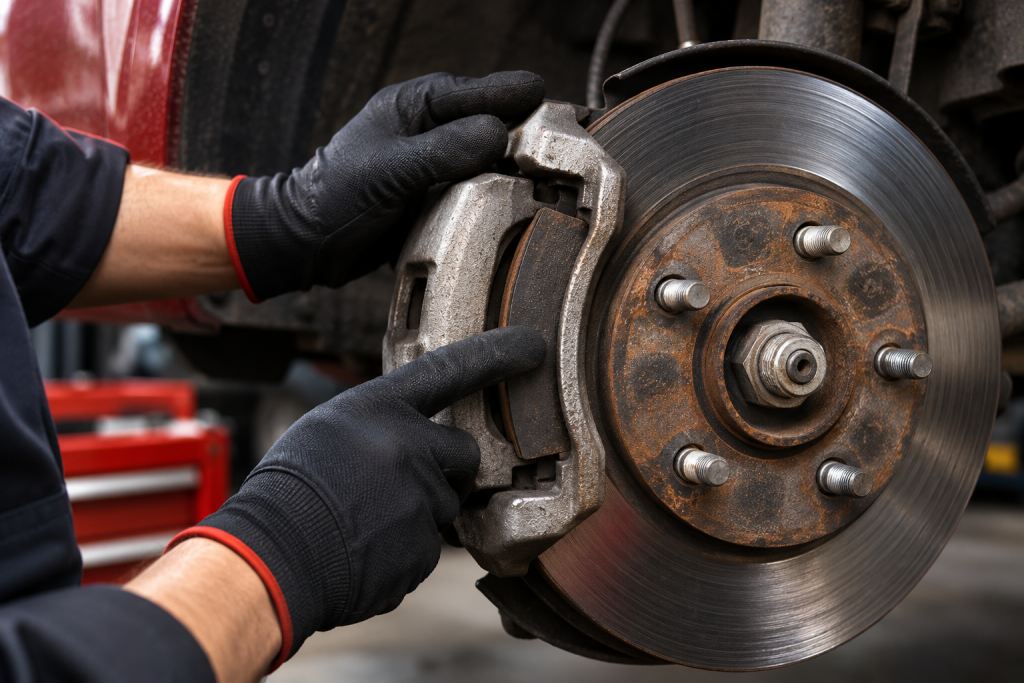
Brakes are supposed to be quiet, or at least quiet enough that you forget about them. So when a squeal, a grind or a click starts coming from the wheels every time you slow down, it gets your attention. Some brake noises are harmless and pass quickly. Others are an urgent warning that something is worn out or damaged. Because brakes are one of the most important safety systems on any car, it pays to know what each sound might mean and when to act. This guide covers the most common brake noises, what usually causes them, what you can safely check and when to stop driving. If you are searching for help with brake noise in Columbia, SC, here is what to know.
Why Brakes Make Noise
When you press the brake pedal, friction material in the pads clamps against a spinning disc called the rotor, or against a drum on some vehicles. That friction slows the car. It is a rough process with a lot of force, heat and wear, so a bit of noise is not surprising. Pads wear down over time, rotors wear and get surface rust, and dust and moisture build up. Many noises come from these ordinary conditions. Others come from worn parts, loose hardware or damage. The sound, when it happens and how it feels all help narrow down the cause.
Squealing or Squeaking
A high pitched squeal is the most common brake noise, and it has several possible causes.
- Wear indicators. Many brake pads include a small metal tab that touches the rotor when the pad material gets thin. It makes a squealing sound on purpose, as a built in warning that it is time for new pads. If the squeal is constant or appears while driving, even when you are not braking, this may be why.
- Moisture and surface rust. Overnight humidity or rain can leave a thin film of rust on the rotors. The first few stops of the morning may squeal or grind slightly until the film wears off. This is common in humid climates and usually goes away after a few stops.
- Glazed pads or rotors. Heat and heavy braking can harden the pad surface, causing squeal.
- Dust and debris. Brake dust or road grit can get between the pad and rotor.
- Pad material. Some pad types simply make more noise than others, particularly in certain conditions.
- Missing or worn hardware. Clips, shims and anti rattle parts help keep pads quiet, and when they wear out or go missing, noise can follow.
A brief squeal that goes away is usually less worrying. A squeal that persists, gets louder or comes with other symptoms is worth an inspection.
Grinding
Grinding is the sound drivers should take most seriously. A harsh, metallic grinding or growling when you brake often means the pad material has worn away completely and metal is scraping against metal. That can quickly damage the rotors and make the repair larger. It can also reduce braking performance. If you hear grinding, avoid unnecessary driving and have the brakes inspected as soon as possible. If the pedal feels different, or the car does not stop as it should, do not keep driving and call for help.
Grinding can also come from a stone or debris caught in the brake assembly, a damaged dust shield or a seized caliper. Whatever the cause, it needs attention.
Clicking or Ticking
A clicking or ticking noise from the brakes often points to loose or worn hardware, such as:
- Pad clips or shims that are loose or worn.
- A loose caliper or bracket.
- Pads that move around in their housing more than they should.
- A loose or damaged wheel component.
Clicking that happens as the wheel turns, even when you are not braking, can be something else entirely, such as a stone in the tread, a loose wheel nut or a worn suspension or axle part. Because a loose wheel is a safety issue, do not ignore a new click or tick, and have it looked at.
Rattling
A rattle, especially over bumps, can mean loose hardware, worn pad clips or a loose caliper. It can also come from suspension parts, so it is not always a brake problem. An inspection can tell which.
Thumping or Pulsing
If you feel a pulsing in the brake pedal or a shake through the steering wheel when braking, and sometimes hear a rhythmic thump, the cause is often rotors that have developed uneven surfaces or thickness variation. Heat, wear and sticking calipers can all contribute. The pulsing tends to be most noticeable at higher speeds. Rotors may be resurfaced or replaced depending on their condition. Our post on summer heat and your car’s cooling system in Columbia explains how hot weather affects other systems that work hard in the same conditions.
Scraping or Dragging
A constant scraping sound, even when you are not braking, may mean something is rubbing where it should not, such as a bent dust shield or a caliper that is sticking. A caliper that does not release properly can also cause the car to pull to one side, a burning smell and a wheel that gets very hot. Stop and get help if you notice these signs.
Humming or Growling That Changes With Speed
A humming or growling that changes with speed and is present whether or not you brake is often a wheel bearing and not the brakes. It can be confused with brake noise, which is another reason a proper inspection helps.
Other Signs That Come With Brake Noise
- A soft, spongy or sinking brake pedal. This can signal a fluid leak or air in the system and is a safety issue.
- The car pulls to one side when braking.
- A longer stopping distance than usual.
- A brake warning light on the dashboard. Your owner’s manual explains what each light means.
- A burning smell after driving.
- Vibration in the steering wheel or pedal.
- Visible brake dust buildup, uneven wear or fluid near a wheel.
If any of these come with a noise, treat it as urgent. Brakes are not something to gamble on.
When to Stop Driving
- The pedal goes to the floor, feels very soft or does not stop the car properly.
- The car pulls hard to one side when you brake.
- There is loud grinding together with reduced braking.
- The brake warning light is on and the pedal feels wrong.
- You see brake fluid leaking or smell burning.
- A wheel is hot, smoking or seems to be dragging.
In these cases, pull over safely when you can, avoid driving further and arrange a tow or an inspection where the car is.
Why Heat Matters for Brakes
Brakes turn motion into heat, so they work especially hard in stop and go traffic, on long downhill stretches and when a car is loaded. Hot weather adds to the load. Overheated brakes can lose effectiveness and wear faster. And when a car is already running hot in other ways, it is a sign to pay attention. Our guide on signs your car is overheating can help you recognize warning signs in the cooling system as well.
How Brake Noise Is Diagnosed
A technician usually starts by asking when the noise happens, whether it is during light or hard braking, at low or high speeds and whether it is constant or occasional. Then they inspect the brake system, which often includes:
- Removing the wheels to see the pads, rotors, calipers and hardware.
- Measuring pad thickness and rotor condition.
- Checking for uneven wear, sticking parts, leaks and damage.
- Checking the brake fluid.
- Test driving to confirm the sound and how the brakes feel.
Typical Brake Repairs
- Replacing worn brake pads.
- Resurfacing or replacing rotors.
- Replacing or lubricating hardware such as clips and shims.
- Servicing or replacing sticking calipers.
- Replacing worn brake hoses or lines.
- Flushing or replacing brake fluid.
- Cleaning and servicing drum brakes where equipped.
Brake repairs are best left to qualified technicians, since mistakes can have serious consequences. Follow your owner’s manual for the service schedule that applies to your vehicle.
Tips to Keep Your Brakes Quiet and Healthy
- Do not ignore early noises. A squeal is easier to fix than a grind.
- Have the brakes inspected regularly, especially if you drive in heavy traffic.
- Avoid riding the brakes and leave extra following distance so you can slow gradually.
- Use a lower gear on long downhill stretches if your car allows it, as described in your owner’s manual.
- Do not carry excess weight that is not needed.
- Replace brake fluid as your manual recommends.
- Use quality parts and have them installed properly.
How a Mobile Mechanic Can Help
Mobile brake repair brings the service to you. A technician can come to your home or workplace, inspect the pads, rotors and hardware, test how the brakes feel and tell you what is causing the noise. Many common jobs, such as replacing pads and rotors, can often be done on site. More complex repairs, such as certain hydraulic or ABS issues or jobs that need a lift or specialized equipment, may need a shop. A good technician will be honest about what can be done where you are and will not put off a safety repair.
Quick Brake Noise Summary
- Squeal: wear indicator, moisture, glazing or dust.
- Grind: pads worn through or debris. Act quickly.
- Click or tick: loose hardware or caliper.
- Rattle: loose parts or suspension.
- Pulsing or thumping: uneven rotors.
- Scraping: a bent shield or dragging caliper.
- Hum that changes with speed: possibly a wheel bearing.
Do not wait on a noise that gets worse. If your brakes are making sounds you do not like, visit the Mobile Mechanic Pros of Columbia SC homepage to learn more, or contact us to schedule a visit.